DevLog 11: What I've Been Up To on the Fragile Allegiance Remake
Greetings, Commanders.
This one isn't about a single feature. I just want to tell you what I've been doing since the last devlog, because the roadmap has changed quite a bit.
Lately I've been spending a lot of my time polishing the game.
Polish
The reason is that I want the game to look quite realistic and have a hard sci-fi feel. These are airless rocks in a vacuum, and things should behave that way. So a lot of this comes down to asking what something would really look like out there.
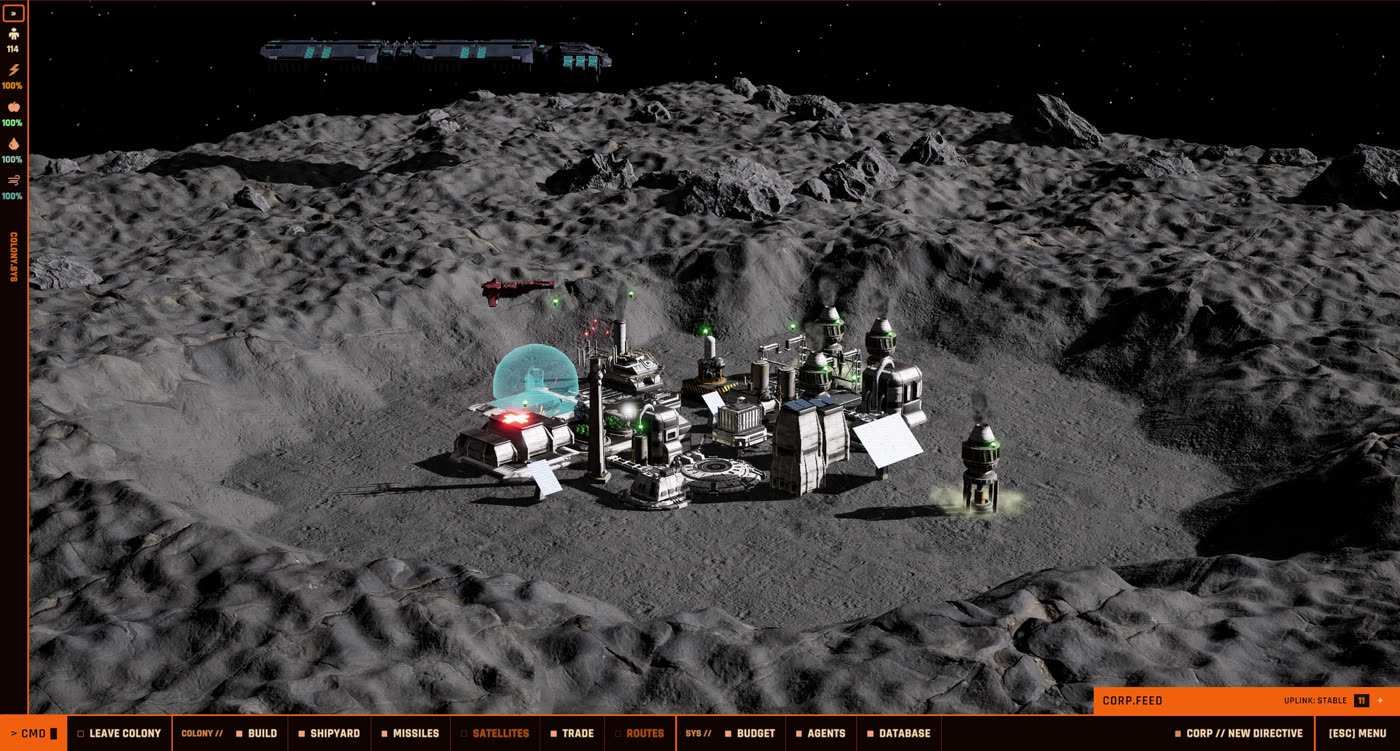
Construction drones now fly with thrust, mass and a top speed. Engine force gives an acceleration, speed is capped, and a drone starts braking early enough to stop on its target, so they have some weight when they move. I didn't use Unity's physics for this, because drones have to follow the game's own clock when you pause or fast-forward. They also pick their parts out of the drop pod and have welding torches while they build and repair.
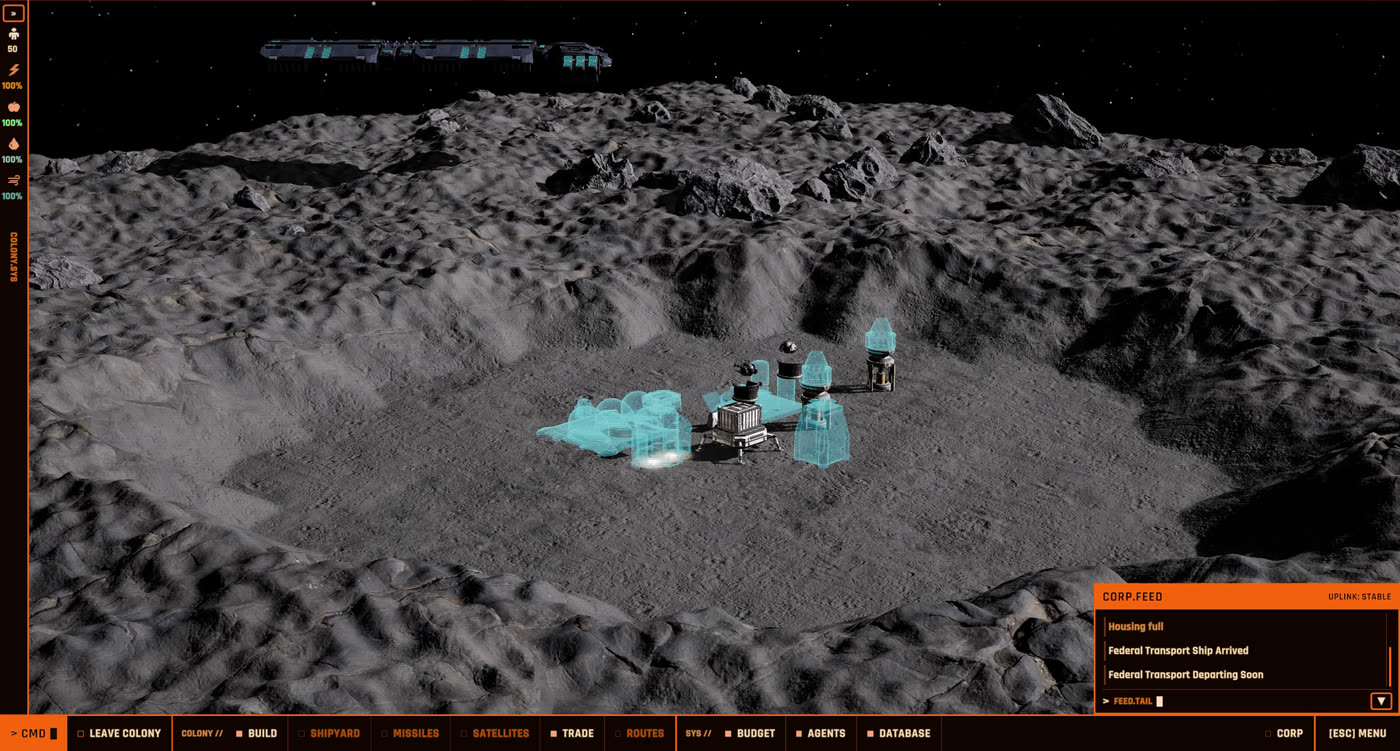
Meteors are another example. I first built them with fire and smoke trails and then dropped that, because there's no air out there to burn in. Now they're bare tumbling rocks that puff dust and break apart when they land or get shot down. Railgun turrets can hunt the big ones.
Explosions
Explosions got a lot of attention, and the nuke went through three versions.
The first was a mushroom cloud made of raymarched volumetric smoke. Particles are flat sprites, so instead a shader steps through a volume for each pixel and works out how much smoke the ray passes through. It's a render feature that only runs in the colony view and costs nothing while there's no smoke. At 4K the frame time stayed at about 17 ms during the cloud. But a mushroom cloud needs air to rise through, so it was wrong for this game.
That led to a second explosion style, built with vacuum rules: no gravity, no buoyancy, a spherical blast growing from a point, slowly fading smoke with loose burning pockets. I simulate these with Mantaflow in Blender using a script, then bake them to flipbooks, which are texture sheets of 8 by 8 frames that play back like an animation. Sheets are 1024 to 4096 pixels depending on the effect. Each one comes as a BC6H colour sheet for the HDR colour, plus a second sheet that stores temperature and alpha. There are versions for ship deaths, missile and torpedo hits, and colony warheads. They're a second style next to the old effects and didn't replace them.
The current nuke is a fireball dome modelled on the high-speed film of the Trinity test. A small ball expands fast and then slows, and it cools from blue through grey and rose to deep orange before dissolving after about 15 seconds. A shockwave of dust moves out ahead of it. Trinity happened in air, of course, so the colours are a deliberate exception to my vacuum rules, but I kept the no-mushroom part. I tried raymarching the dome as well, but it couldn't hold a smooth shell and was too expensive at that size.
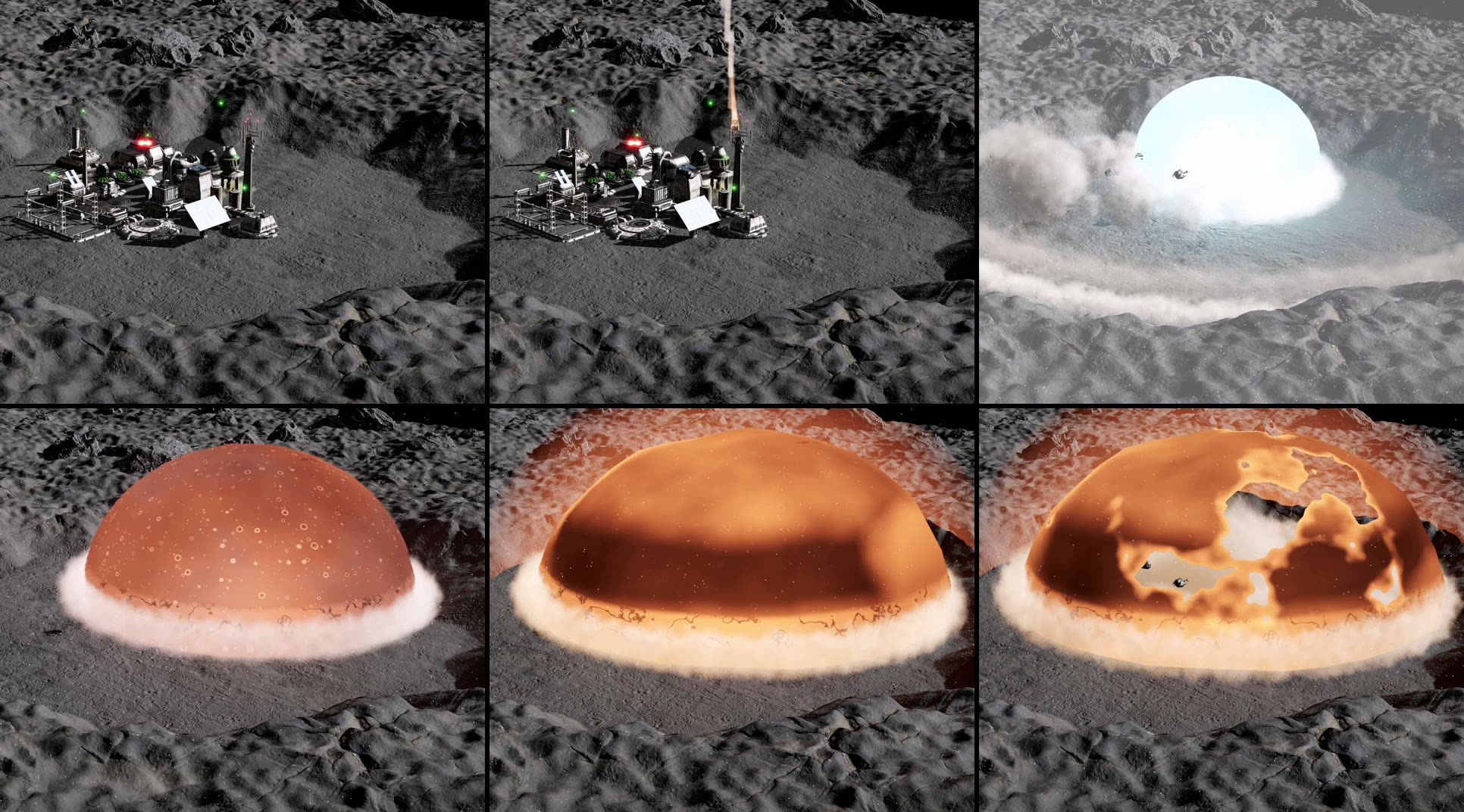
While the dome runs, radiation shows up as white static pixels on the view, as if it were hitting the camera's sensor. The flash stops short of a full whiteout so you can still see your colony, and damage is highest in the middle and falls off with distance.
Bombs use a VFX Graph explosion with a volumetric fireball on top, because the VFX alone looked 2D.
Everything Else
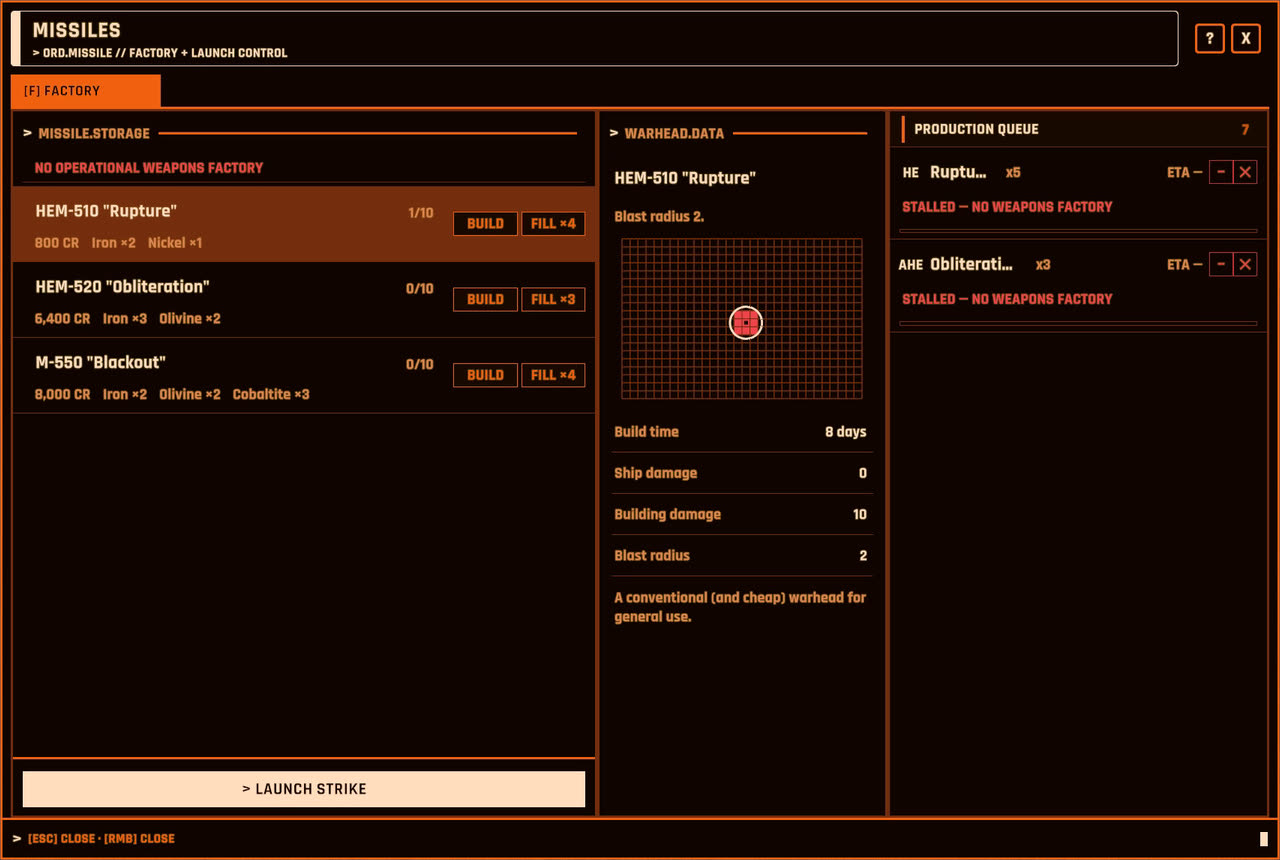
Some of it is more practical. Every building that can stop working now has a status light, so you can spot an idle mine by looking at the colony. The missile factory has an info column that shows a warhead's blast footprint on the colony grid. You can click, place buildings and zoom while paused. And there are a lot of little fixes, like the colony log no longer repeating the same alert over and over.
I also spent several days cleaning up the code, splitting the biggest classes and moving combat numbers out of code so they're easier to tune. And I moved the whole UI built in DevLog 05 from UIDocument to Unity's PanelRenderer, which touched more than 60 scripts. You won't see any of that if it worked. I've checked the UI change in the editor, but not in a real build yet, so I expect some of it will break.
Fighting in Open Space
The biggest new thing is that ships can now be intercepted in flight. Before, fights only happened at asteroids. Now you can meet a bomber fleet before it reaches your colony, but without your turrets to help you. If you're the one being intercepted, you can try to break off before contact.
An intercept steers to a lead point, where the two ships should meet, and the game refuses the order if your ship can't fly there and back on its fuel.
I tried running these fights directly on the asteroid field first and threw that away, because it meant two separate combat systems. Now every fight runs on the same combat simulation from DevLog 08. It works on a "battle site", which can be an asteroid or a point in open space, and the ships on the field just face each other and show tracers while the real fight happens in the battle view.
So space battles use the same controls as colony battles. They're about speed and cover. A shot only checks for rocks when it arrives, so a ship that gets behind one in time dodges it. I've seen the basics working, but the later additions haven't had much testing. The AI doesn't use intercepts yet either, so at the moment only you can do this.
Colony combat also moved to more direct RTS controls, with an overhead tactical view.
I Changed the Plan
This is the bigger news. In October I looked at the numbers from ten AI-vs-AI test games, and all ten ended in a stalemate. Rivals typically didn't meet until around day 1,072. Money never really put you under pressure, and colonies all ended up being built the same way.
I think the cause is that I never decided what the smallest fun version of this game was. I just kept adding systems. So now there's a written scope, and anything outside it stays switched off until the core works.
That means research and diplomacy are off for now, along with most random events, including the crime and virus incidents I wrote about in DevLog 10. They're still in the code. The events only hit you and not the AI, so they'll wait until that's fixed. The Sci-Tek shop is the exception. I removed that one completely.
Instead, the game now has an ending. You play on a Federation licence of 5, 10 or 20 years, and when it runs out the sector charter is awarded and you see the standings. I've also added spy satellites, agents with specializations, attack plans and reports, and Corsairs, who have hidden bases and raid you early on, so the first years aren't empty anymore.
What Isn't Done
Quite a lot, and the polish I talked about above doesn't change that. My own plan said no new presentation work for now, and I still spent a good part of this time on explosions and a teaser.
Federation contracts and a starting loan aren't started. Neither are claims, deeper surveys or a belt that moves predictably, or asteroid traits and colony founding kits. Those are the things that should make the economy, exploring and expanding interesting. The siege planner is missing too.
I also haven't had anyone else play it. So far the test games are automated. I built a demo version in October and then removed it again, because it no longer compiled and keeping two versions of the game working wasn't worth it for now.
So Early Access is further away than the old roadmap suggested, and I still don't have a date.
What's Next
AI intercepts first, and then measuring how space combat changes the test games. After that I'll start on contracts and the loan.
Signing out,
- Jari
Deploy to the Front Lines
Early access intel delivered straight to your comms. Join the growing fleet of commanders preparing for deployment.